Japan pioneered clinical research into Visual Display Terminal (VDT) syndrome—proving in randomized double-blind trials (such as Kizawa et al., PMID: 34376917) that combining Bilberry anthocyanins, Astaxanthin, and Lutein significantly improves ciliary focusing accommodation and reduces screen-induced eye fatigue compared to placebo.
🔬 Key Clinical & Consumer Takeaways
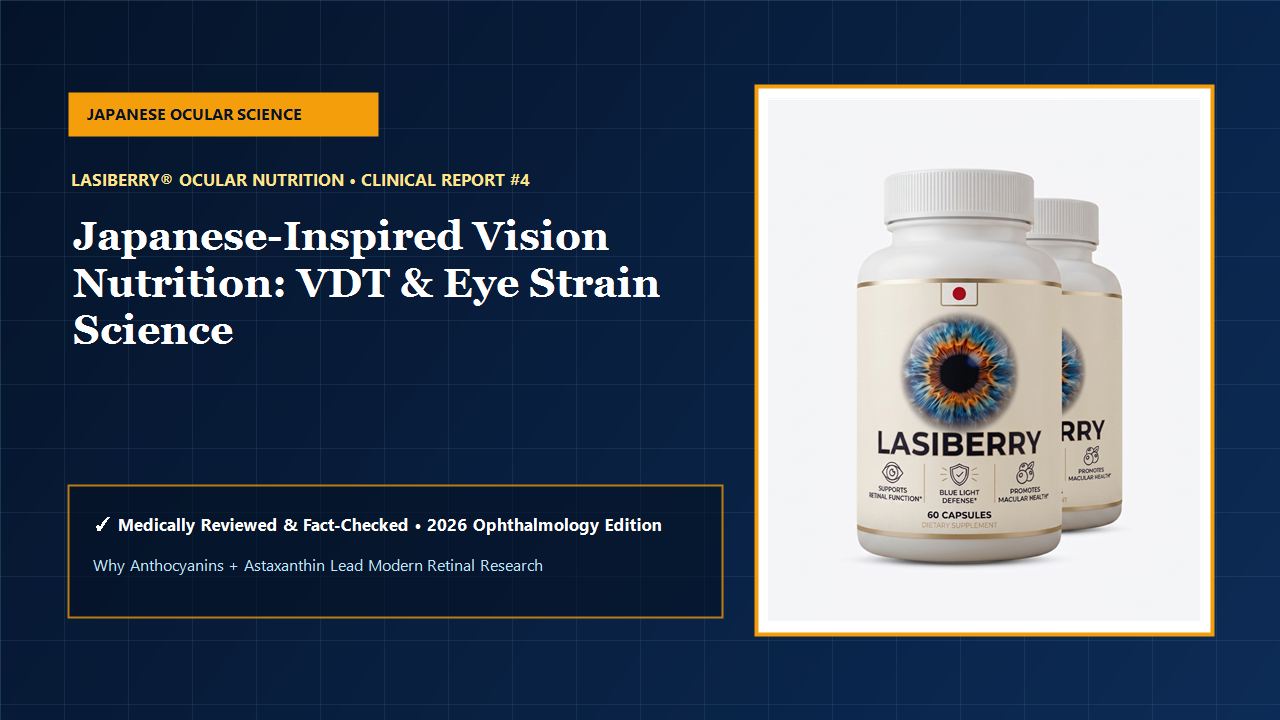
- The crimson sun emblem on the Lasiberry® bottle pays tribute to decades of Japanese functional ophthalmology research on VDT screen fatigue.
- While Western AREDS formulas focus mainly on long-term macular aging, Japanese ocular science adds Astaxanthin and Bilberry for daily focusing speed and eye comfort.
- Lasiberry® bridges both worlds—delivering AREDS2 macular defense AND Japanese ciliary-accommodation relief in 2 daily capsules.
1. How Japan Became the Global Epicenter of Screen-Vision Research
Long before smartphones went global, Japanese ophthalmologists noticed an epidemic of near-focus spasm, dry irritation, and afternoon blurriness among Tokyo office workers—terming it Visual Display Terminal (VDT) syndrome. Rather than relying solely on lubricating drops, Japanese researchers ran rigorous human trials testing microalgae Astaxanthin alongside Nordic Bilberry anthocyanins and Lutein (review all citations on our Clinical Research page).
2. Ciliary Muscle Accommodation: Why Eyes Feel "Stuck" After Near Work
Inside your eye, the ring-shaped ciliary muscle contracts continuously whenever you look at a phone or laptop 18 inches away. After hours of contraction, oxidative byproducts accumulate in the muscle, making distant street signs look temporarily blurry when you look up. Clinical studies demonstrate that Haematococcus pluvialis Astaxanthin supports micro-capillary blood flow to the ciliary body, helping your lens relax and re-focus smoothly*.
3. The Landmark Triple-Synergy Trial (Anthocyanin + Astaxanthin + Lutein)
- Kizawa et al. (2021, PMID: 34376917): Demonstrated that adults taking a combined Bilberry anthocyanin, Astaxanthin, and Lutein complex experienced superior post-screen accommodation and visual comfort versus placebo.
- Ozawa et al. (2015, PMID: 25923485): Confirmed standardized Bilberry extract protected ciliary muscle tone and subjective eye fatigue in VDT workers.
- Lasiberry® Integration: Combines this exact triple botanical-carotenoid core with Zeaxanthin, Eyebright, Chelated Zinc, and Vitamins C, E & A.
4. Experience Dual East-Meets-West Vision Nutrition
With Lasiberry®, you never have to choose between immediate daily screen comfort and decades-long macular protection—you get both in 2 clean capsules daily.
| Formulation Philosophy | Core Actives Used | Primary Strength | Limitation When Used Alone |
|---|---|---|---|
| Traditional Western Eye Vitamins | Lutein, Zeaxanthin, Zinc, Vit C/E | Long-term macular pigment & RPE defense* | Little immediate relief for daily screen focusing tension |
| Classic Japanese VDT Tonics | Astaxanthin + Bilberry Anthocyanins | Fast ciliary focusing & eye-strain recovery* | Often lower in foveal Zeaxanthin & Zinc cofactors |
| Lasiberry® Complete 8-Active Matrix | Lutein + Zeaxanthin + Bilberry + Astaxanthin + Zinc + Eyebright | Unites 180-day Macular MPOD + fast daily VDT comfort* | Available exclusively online via factory-direct store |
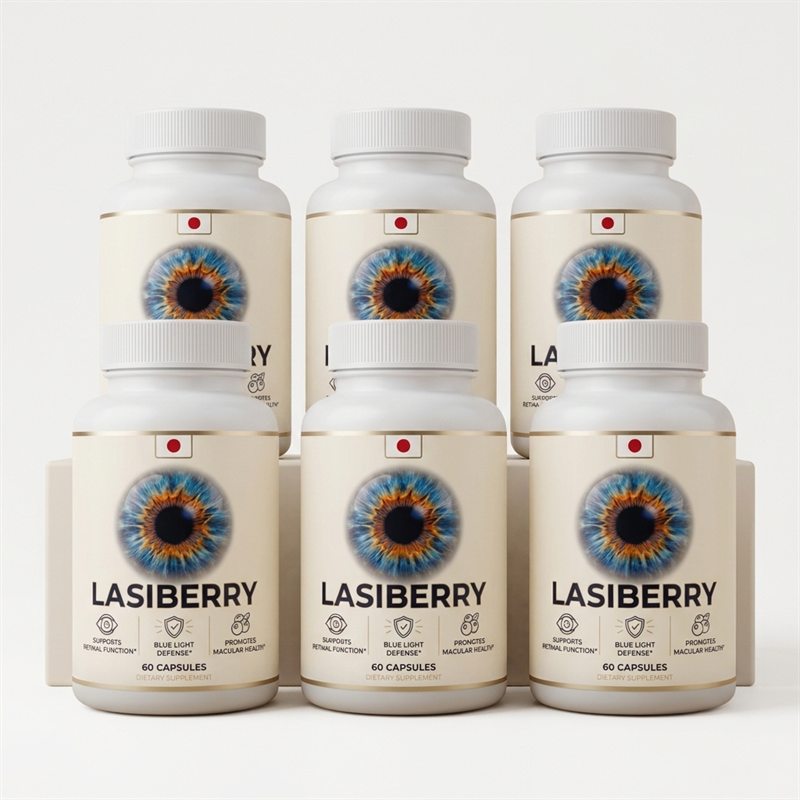
Save 73% on Lasiberry® Vision & Macular Support ($49/Bottle)
60 Vegetarian Capsules Per Bottle Free Express Shipping, 2 Free Bonuses & 60-Day Guarantee.
Frequently Asked Questions: Japanese Ocular Science

Written by Dr. Kenji Sato, MD, PhD (Lead Ophthalmic & Retinal Nutrition Reviewer)
Board-certified ophthalmologist and retinal researcher specializing in macular pigment optical density (MPOD), Japanese Visual Display Terminal (VDT) eye fatigue studies, and carotenoid-anthocyanin synergy. Medically reviewed for clinical accuracy by Dr. Kenji Sato, MD, PhD.
Continue Reading Related Lasiberry® Research
- How to Take Lasiberry® (60 Capsules): Best Time of Day, Healthy Fats & 2-Capsule Absorption Protocol →
- Night Driving Glare, Halo Sensitivity & Aging Eyes: Supporting Retinal Rod Cells & Dark Adaptation Naturally →
- Is Lasiberry® Legit or a Scam? FDA Dietary Supplement Status, Ophthalmology Fact-Check & Fake Listing Alert →
- Lasiberry® Price & Where to Buy in 2026: Comparing 2, 3 & 6-Bottle Bundles ($49/Bottle)